On an asphalt job, the trucks are easy to take for granted until they go wrong. A load turns up late, the paver runs dry, the mat cools, and a job that was running well suddenly has a cold joint in it, or the truck booked for a tight inner-suburban street turns out to be too big to get in, and half a day is lost reorganising.
For councils, civil contractors and project managers across Melbourne and regional Victoria, material transport is rarely the headline item on a job, but it is one of the most reliable ways for a job to fall behind or lose quality. Getting it right comes down to something simpler than it looks: matching the right truck to the tonnage you need to move and the site you need to move it into.
Tipper and tandem truck hire is built around exactly that match. The sections below cover how the trucks differ, how payload and site access drive the choice, why transport timing affects the quality of the finished pavement, and what to look for in a haulage provider, drawing on the experience of the people who do this work every day across Victoria.
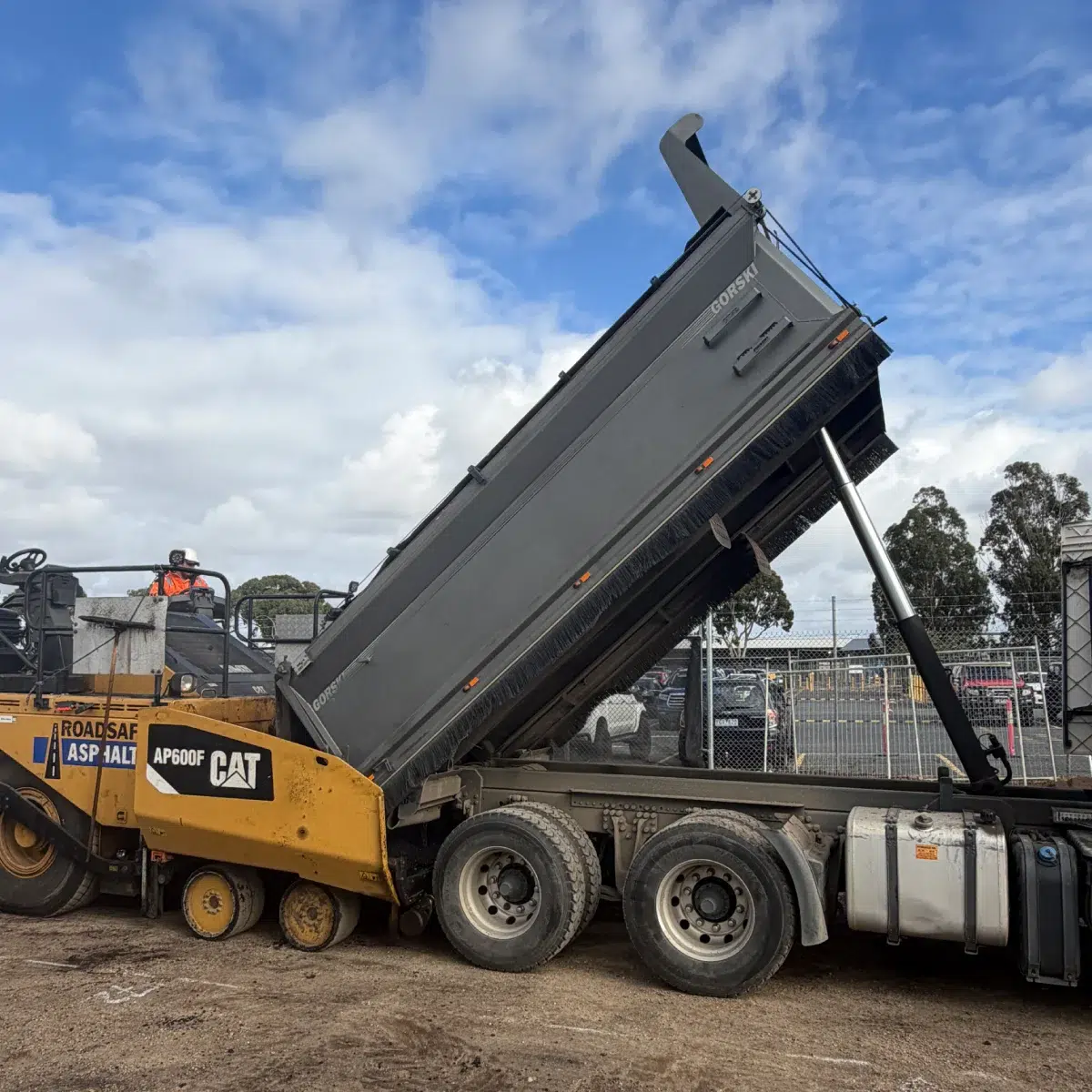
How Material Transport Timing Affects Compaction and Cold Joints
Across Victoria, major road, infrastructure and civil construction projects continue to place heavy demand on asphalt suppliers, contractors and haulage providers. In that environment, reliable material transport is no longer just a logistical requirement. It is a critical factor in maintaining paving quality, meeting project deadlines and protecting the long-term performance of the finished pavement.
The reason comes down to the material itself. Asphalt is laid hot and has to be compacted while it is still workable, and it cools faster in thin layers and cool conditions. If supply to the paver is interrupted, the mat cools, and once the exposed edge drops below about 95°C, the next material has to be placed against it as a cold joint rather than blending into a continuous mat. A cold joint is where pavements crack and let water in first. Consistent compaction depends on a consistent supply of hot material arriving at the right rate.
What this means in practice is that the trucks set the tempo of the whole job. A paver is most productive when it moves forward continuously, and maintaining a steady, continuous paving speed matched to plant output is one of the recognised conditions for a smooth, well-compacted surface. The paver can only hold that rhythm if the next load arrives before the last one runs out. Get it right and the crew lays a uniform mat at an even temperature; get it wrong and the paver stops, the material in the hopper cools, and the crew is left managing a problem the plant never created. This is why load turnaround time, the round trip from plant to site and back, is one of the numbers an experienced haulage provider watches most closely. It is also one of the things even capable project managers occasionally get wrong, as Callen Rogerson, Plant Operations Manager at Roadsafe Asphalt, has found, because it is easy to plan the tonnage and forget how long each load actually takes to cycle on a congested road.
The cost of getting transport wrong, then, does not only show up as time lost on the day. It shows up later in the pavement itself, in the joints and the patches of uneven compaction that trace back to a paver that kept stopping.
Why Tipper and Tandem Trucks Are Central to Material Transport on Asphalt Projects
The trucks are what turn a continuous supply of material into a finished pavement. On asphalt and civil projects they move mostly asphalt, profilings and crushed rock, but the same trucks routinely carry dirt and earth, clay, cappings and scoria. The body that hauls aggregate to a site in the morning might cart profiling waste away from it in the afternoon, which is part of what makes these trucks the workhorses of a civil job, and why getting the right one to the right place at the right time sits at the centre of keeping a paver supplied.
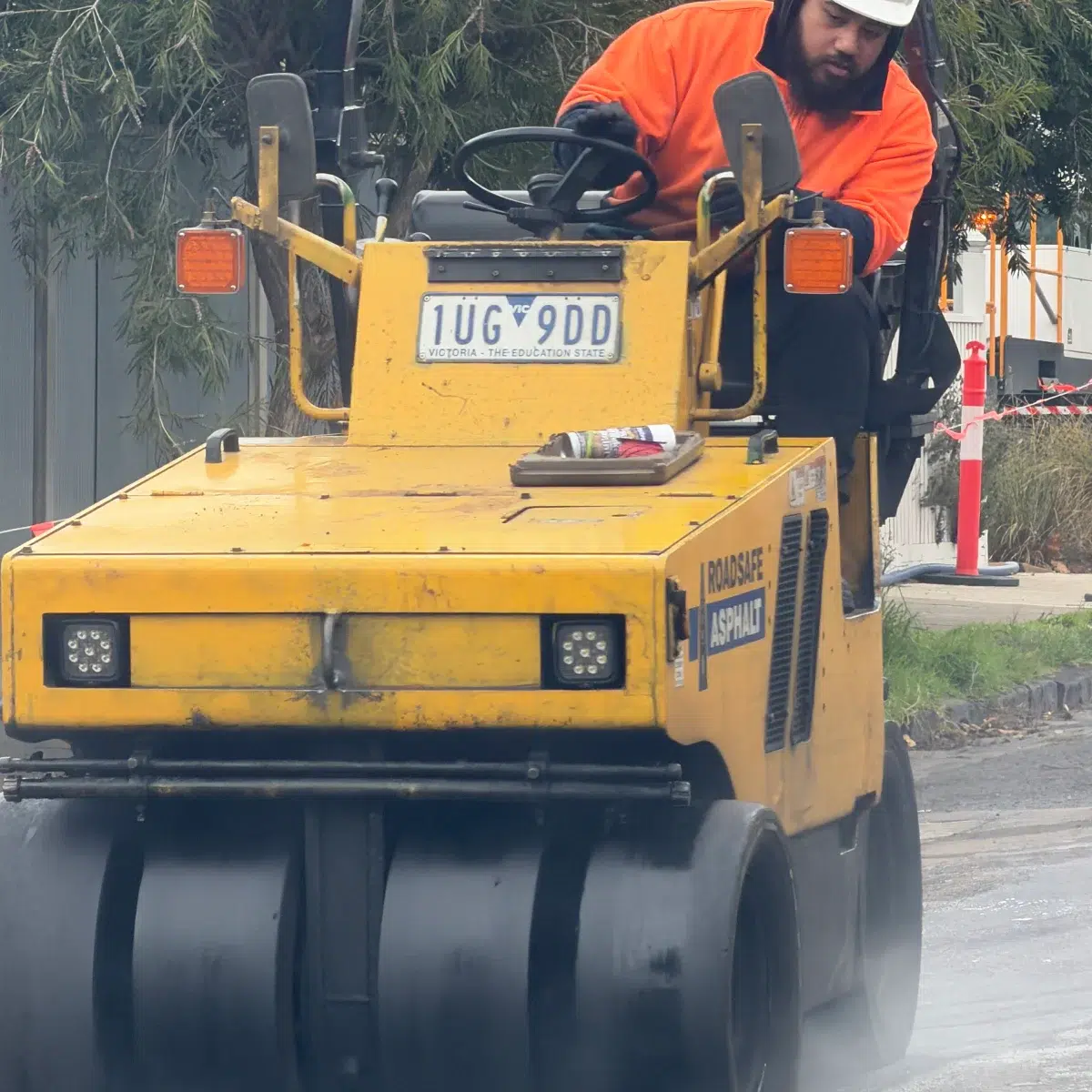
It helps to clear up the language first, because the industry uses it loosely. A tandem, strictly speaking, is any truck with dual rear axles, three axles in total counting the steer axle, usually fitted with a tipping body. A tipper, in everyday use, tends to mean a smaller single-rear-axle truck with a hydraulic tipping body. In practice the two terms overlap and get used interchangeably. Callen is blunt about it: “a tandem just means a truck with dual rear axles,” and while it can technically be a box truck or a tray truck, in this industry it almost always refers to one with a tipping body, “hence it is also just a type of tipper truck.”
The naming matters less than what the truck is actually doing, which is moving the right material to and from site at the rate the job needs. That is where the choice of truck, and the experience of the person running it, starts to shape the outcome of the project.
What Type of Truck Is Best for Asphalt Works? A Guide to Tippers, Tandems and Truck & Dogs
The decision about which truck to put on a job is not really about the name on the docket. It comes down, as Callen puts it, “to the site access area and tonnage that is required to be moved.” Those two factors pull against each other, and understanding the trade-off is most of the job.
A standard tandem or tipper carries around 11 to 13 tonnes. It is the most manoeuvrable of the options, which is what makes it the right call for tight or constrained sites where a larger truck simply cannot get in or turn around. A Truck and Dog, the truck-and-trailer combination, carries far more at 24 to 28 tonnes, and a Flocon, or live-bottom truck, holds around 26 tonnes. The larger the payload, the fewer loads and the lower the cost per tonne moved, but the harder the truck is to fit into a difficult site.
The practical question on any job is which constraint binds first: an open job with room to move wants the largest truck that can work there, while a tight urban patch wants the truck that can actually reach the work, even if that means more loads. Most experienced project managers already think this way. In Callen’s experience they “are pretty good with the general information,” and where they occasionally slip is on “the turnaround time of loads or the access concerns for larger trucks.”
Tipper Trucks vs Flocon Trucks: What’s the Difference?
The choice that comes up most often on asphalt work is between a tandem tipper and a Flocon, and the two suit genuinely different situations. Callen lays out the trade-off directly. As he describes it, a “Flocon can hold approx 26 tonnes and is generally easier to load and unload than a tandem, but less flexibility to carry different types of material in the one truck,” whereas a “Tandem/Tipper can only hold around 11 to 13 tonnes but is more manoeuvrable.” A Truck and Dog sits between them, holding “between 24 to 28 tonnes depending on body type” for jobs where access allows the larger combination.
The decision, then, runs along four lines: how much material has to move, how it needs to be unloaded, what access the site allows, and whether one truck needs to carry different materials through the day. There is no single best truck, only the right one for the job in front of you. For asphalt supply at volume on an accessible site, the Flocon often wins; for tight access and material flexibility, the tandem does. Roadsafe Asphalt’s plant and equipment hire fleet covers all three configurations, so the truck can be matched to the job rather than the job to the truck.
Why Tipper and Tandem Trucks Are Essential to Civil and Infrastructure Projects
Beyond asphalt paving, these trucks turn up across almost every stage of a civil job, which is why they are central to the work Roadsafe Asphalt does for councils, contractors and utility providers across rail, civil and infrastructure projects. They deliver asphalt and crushed rock to site, cart aggregate for pavement layers, and remove profiling waste once a road has been milled. They move spoil, earth and clay during earthworks, and they run the steady haulage that council road-maintenance and patching programs depend on, where material is constantly being delivered to and removed from a network of small jobs.
This breadth is why a single transport arrangement often has to cover several roles on one project. The same fleet supplying aggregate for a new pavement layer or civil works package may be removing milled material from an adjacent section in the same shift, and coordinating those movements so they don’t collide on a constrained site is part of what haulage planning actually involves.
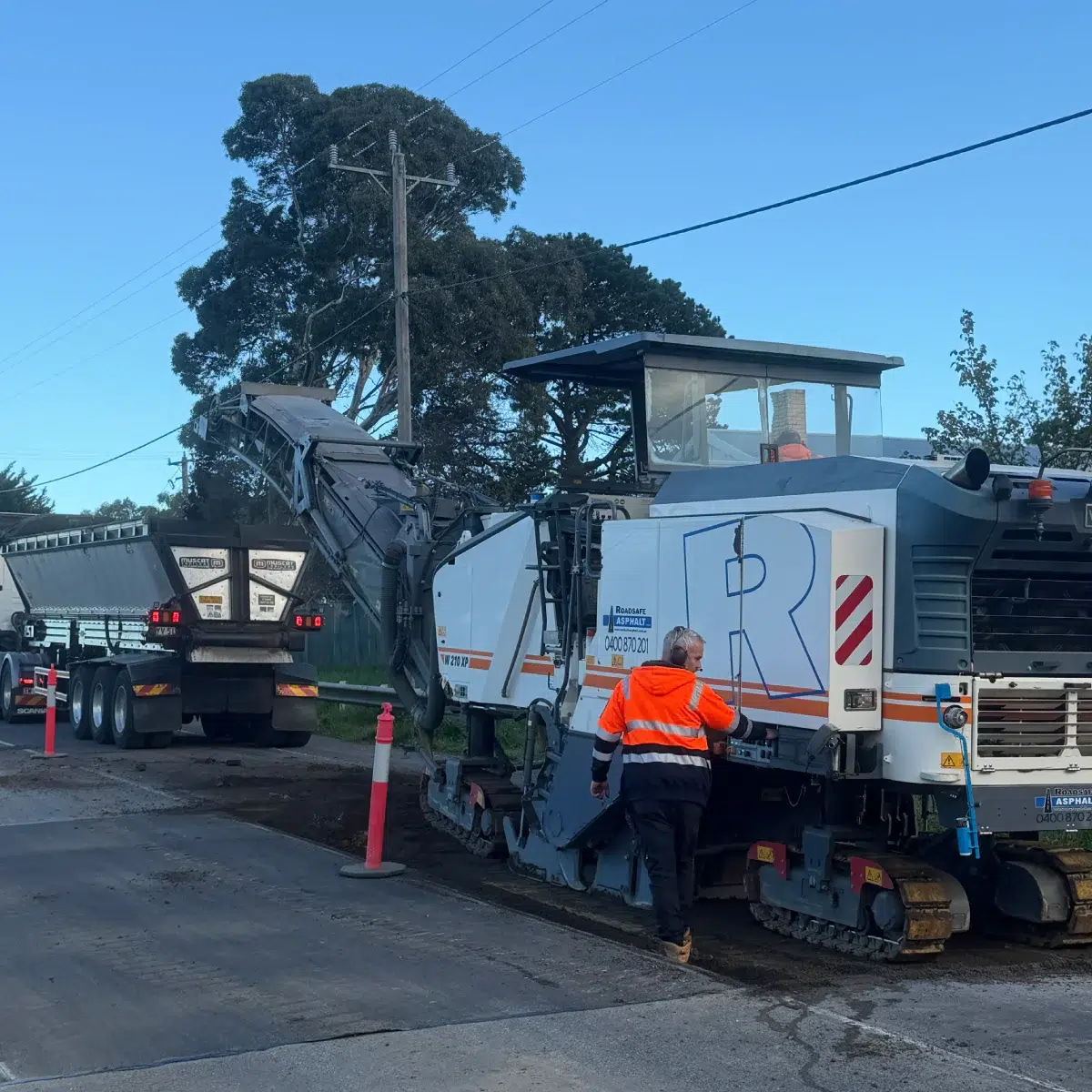
The Roadsafe Asphalt Approach to Transport, Logistics and Project Delivery in Victoria
Truck hire at Roadsafe Asphalt is built around a repeatable cycle rather than just putting a vehicle on the road. The day starts at the yard with prestart checks. If material is going to site, the truck loads at the asphalt plant or quarry, delivers to site and tips or unloads. If the job is removing material, the truck heads straight to site, gets loaded, and runs to the tip site to unload, repeating the cycle as many times as the job needs.
The work is not finished when the last load is tipped. The driver is signed off site by the foreman or supervisor, washes up the truck, returns to the yard and completes a completion report before the day ends. Throughout, the value is in coordinating the loads with the asphalt plant and the paving crew so that supply matches the rate of work, which is what keeps a paver running steadily.
Every truck comes with an experienced driver, and on asphalt work that is a meaningful difference rather than a formality. The problems that slow a job down are mostly the ones a good driver pre-empts: reading the turnaround time so the paver never runs dry, judging whether a larger truck can actually get into a site before it is committed, and keeping the load itself sound. That wash-up step between loads matters more than it sounds. A driver who understands asphalt knows that a body which has just carried dirt or clay has to be cleaned before it carries the mix, and Callen is direct about why: the risk is “contamination of asphalt due to body not being cleaned after carrying dirt etc and then gets mixed with asphalt.”
Hiring the truck with the driver means hiring the judgement that comes with it, which on a precision asphalt job is the part that does not show up on the docket but shows up in the result.
The Most Common Haulage Challenges in Asphalt Projects and How to Avoid Them
Asked what goes wrong most often on asphalt and civil jobs, Callen names three things directly: “traffic, breakdowns, contamination.”
Traffic and breakdowns are managed the same way, through scheduling discipline and fleet availability. A provider running enough trucks can absorb a breakdown or a delayed run without leaving the paver waiting, where a thinly stretched fleet cannot. Contamination, the third issue, is the most avoidable of the three: it starts in the truck rather than the plant, and the fix is the disciplined wash-up between material types built into every Roadsafe Asphalt deployment.
The turnaround and access points raised earlier belong here too, because they are the challenges most often underestimated rather than the ones most often blamed. Neither is a surprise on a well-run job. Both are foreseeable with the right planning, which is the quiet value an experienced haulage provider adds before a single load is dispatched.
Why Roadsafe Asphalt is Trusted for Truck Hire Across Victoria
What separates a capable transport provider from a basic one, on asphalt work, is range. A fleet that runs only one type of truck forces every job to fit that truck, which means either bringing oversized plant onto a site that can’t take it or running too many small loads on a job that needed capacity. Roadsafe Asphalt runs tandem tippers, Truck and Dogs and Flocons under one wet-hire fleet, so the truck can be matched to the job’s tonnage and access rather than the other way around.
Behind that fleet is the part that actually keeps projects running: our experience. Nearly 20 years of operation across Melbourne and regional Victoria, over 45 major fleet and plant equipment, and long-term client relationships sit behind every job. Many of Roadsafe Asphalt’s customers have stayed with the business for more than 15 years, across hundreds of successful projects throughout Victoria for local councils, major contractors, utilities and transport providers, spanning rail, civil and utility infrastructure.
The rest of what matters is less visible but no less important on a live job: experienced drivers who read turnaround and access, logistics coordinated with the asphalt plant and paving crew, safety systems including Safe Work Method Statement (SWMS) and permits, and prequalification to Department of Transport and Planning standards. For a council or principal contractor, the practical upshot is that the haulage is one fewer thing to manage, because the compliance, the scheduling and the load integrity sit with the provider.
Successful Asphalt Projects Start with the Right Transport Strategy
Material transport decides more about an asphalt job than its low profile suggests. The right truck is the one matched to the tonnage and the access; the right supply is the one timed to keep the paver moving and the mat hot; and the right load is the one carried in a clean body by a driver who knows why that matters. None of it is complicated, but all of it is easy to get wrong, and the consequences, cold joints, downtime, contamination, surface in the pavement long after the trucks have left.
Whether you are moving asphalt to site or carting material away from it, the right trucks and drivers make the difference between a job that runs to schedule and one that doesn’t. Get a fast quote for your next tipper and tandem truck hire project, or speak with a Roadsafe Asphalt specialist about the haulage and logistics behind your project.
Frequently Asked Questions (FAQs)
What’s the difference between a tandem and a tipper truck?
A tandem is any dual-rear-axle truck, usually with a tipping body; a tipper, in everyday use, tends to mean a smaller single-rear-axle truck. In practice the terms overlap and a tandem is just a larger type of tipper.
How much can each truck carry?
A tandem or tipper carries around 11 to 13 tonnes, a Truck and Dog 24 to 28 tonnes, and a live-bottom truck around 26 tonnes. The right one depends on how much you need to move and how tight the site is.
Tipper or Flocon: which do I need?
A Flocon suits high-volume asphalt supply on accessible sites and is easier to unload; a tandem tipper suits tight access and mixed material types across a day. Truck and Dog sits between them on capacity.
Does Roadsafe Asphalt’s truck hire include a driver?
Yes. Every truck comes with an experienced driver who manages load turnaround, site access and load integrity, which on asphalt work directly affects the result.
What materials can the trucks carry?
Mostly asphalt, profilings and crushed rock, but also dirt and earth, clay, cappings and scoria across civil works.
How do you prevent asphalt contamination between loads?
By cleaning the truck body between material types. Carrying asphalt in a body that still holds dirt or clay residue contaminates the mix, so wash-up is built into every deployment.