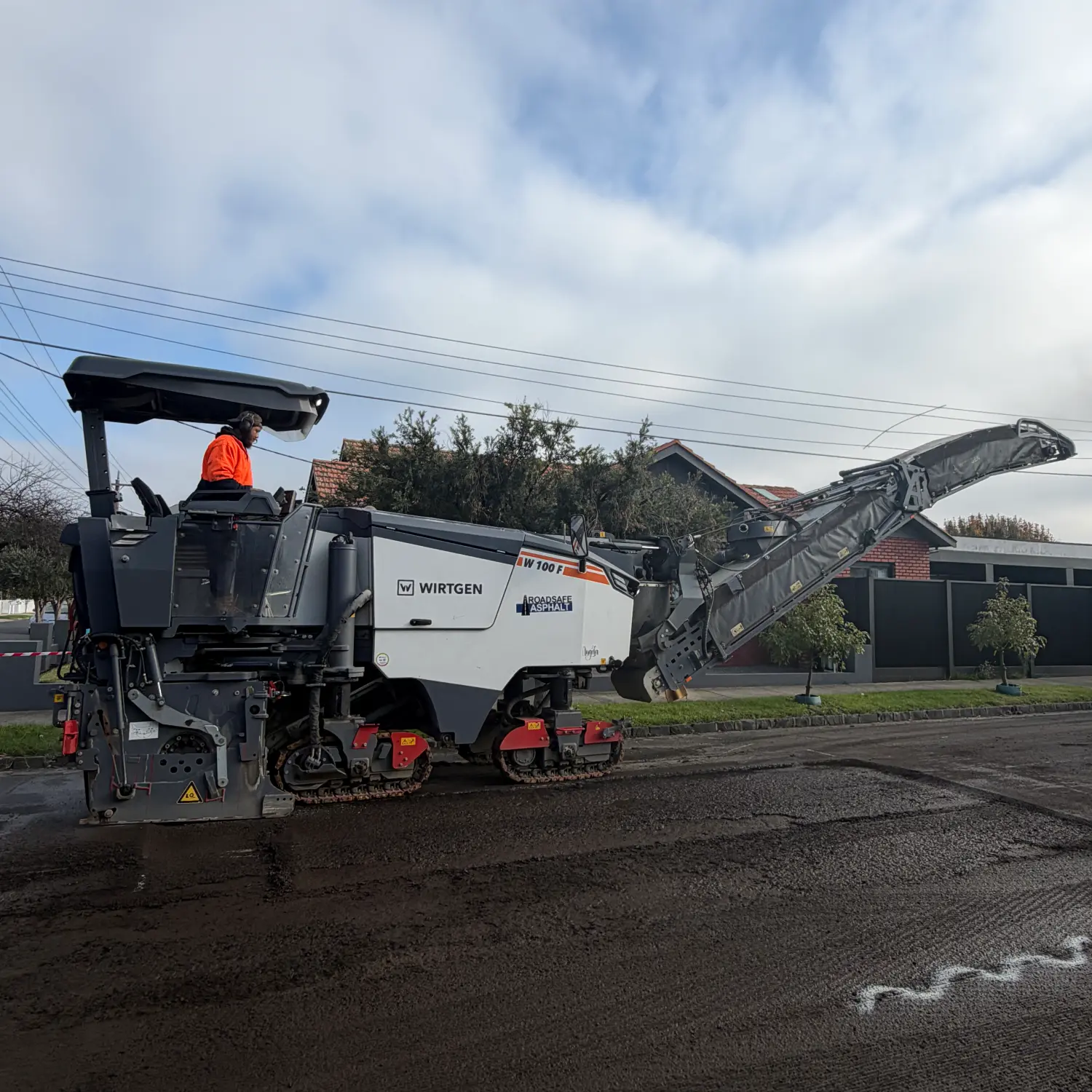
On an asphalt job, the truck is easy to overlook until a load turns up cold. When that happens, the mix will not spread or compact, and the finished surface carries the consequence for years in a poor finish or a density failure. The cause is no mystery: compaction has to be completed while the asphalt is still workable, and asphalt sheds heat fast in thin layers and cool conditions. Hold the heat and the load performs. Lose it and the load is wasted.
Tight urban and council work adds a second problem on top of the first. The job sits in a confined space, often under powerlines or low branches and over uneven ground, where a truck that has to raise its body to tip is awkward at best and dangerous at worst. A standard tipper struggles with both the heat and the access. The flocon is the truck built to solve them together.
This is where flocon truck hire earns its place. Roadsafe Asphalt runs small 7-tonne insulated flocons for exactly this work: urban jobs, tight access, utility reinstatements and the detailed council repairs that make up so much of local road maintenance. Rather than tipping to unload, a flocon feeds asphalt out the rear on an internal chain floor, in a slow, controlled flow.
As Hector Psihountakis, Operations Manager at Roadsafe Asphalt, puts it, “the biggest difference compared to a standard tipper is the unloading method and temperature control.” Both come back to the same thing: protecting the quality of the asphalt that finally goes down. The rest of this guide works through how, and what it means for the councils, contractors and utilities Roadsafe Asphalt supplies across Melbourne and regional Victoria.
Why a Flocon Is Built Differently from a Standard Tipper
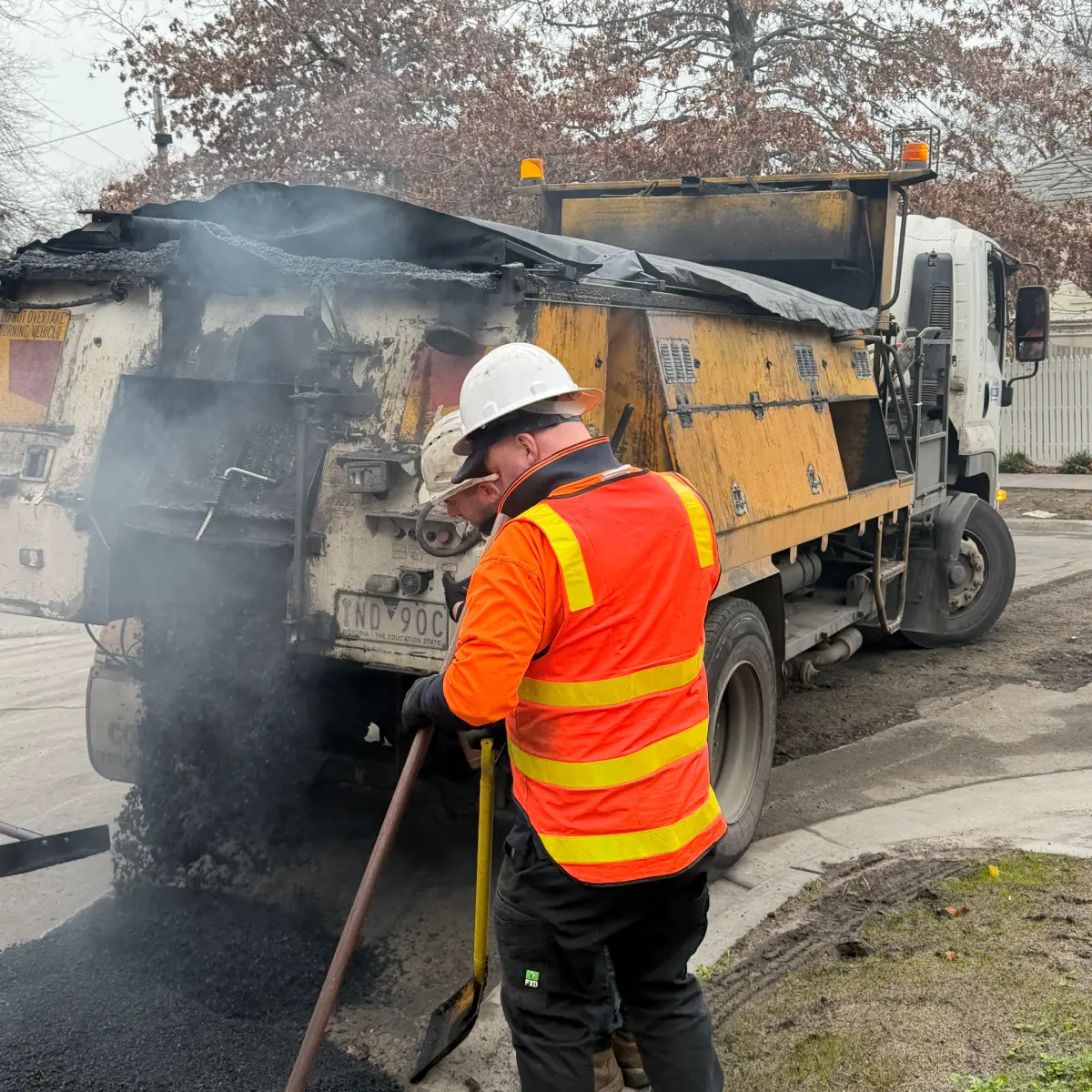
A flocon is a specialised insulated asphalt truck, designed to carry hot mix and hold it at temperature all the way to the work. Roadsafe Asphalt runs them at around 7 tonnes, fitted with an internal drag-chain floor and an insulated body, with a rear gate built to discharge directly into the paving equipment or the repair itself.
The unloading method is the first real difference. A standard tipper lifts its whole body and lets gravity drop the load out the back. A flocon keeps its body down and runs a chain floor that drags the asphalt rearward and feeds it out evenly. Nothing rises, nothing tips. That single change is what lets the truck work safely under powerlines, beneath low branches and on the uneven ground where a raised tipper body would be a hazard.
The second difference is heat. The insulated body holds temperature through the run, and the load travels covered, so the asphalt reaches the crew still within its workable range. The trucks even carry the hand tools the job needs on arrival, rakes, a compaction plate and hand tampers, so a small crew can place and finish a repair without waiting on anything else. Loading is the only part that looks ordinary: a flocon fills at the plant like any other truck. Everything after that is built around protecting the load.
Where Flocon Hire Fits on Council, Civil and Utility Projects
Because the flocon is built around temperature and access rather than raw volume, the jobs that suit it share a particular shape. Hector points to the type of work, the access, the safety requirements and the haul distance as the things that decide it, and on the small 7-tonne trucks, it is usually the conditions on site rather than the distance that make the call. Wherever a job brings tight access, controlled material flow, overhead hazards or stop-start utility work, the flocon earns its place regardless of how far it has to travel.
In practice, that points to work like:
- Utility reinstatements, where access is limited and the repair is detailed.
- Council maintenance and patching programs made up of small, confined jobs across a road network.
- Small asphalt repairs and civil works packages where manoeuvrability counts for more than payload.
- Sites with overhead hazards or uneven ground, where unloading without raising the body is the safe option.
The scale of this work is easy to underestimate. So much of local road maintenance is small in area and detailed in execution, the confined patches, trench reinstatements and tight council repairs that a larger truck struggles to service, and it is precisely this work where a fleet of insulated flocons earns its keep.
Flocon Trucks vs Tipper Trucks: Which Is Right for Your Project?
Before going further into how a flocon protects a load, it helps to place it against the truck it is most often compared with. The flocon and the standard tipper are built for different problems, and choosing between them comes down to the two differences Hector named: how the truck unloads, and whether it protects the heat.
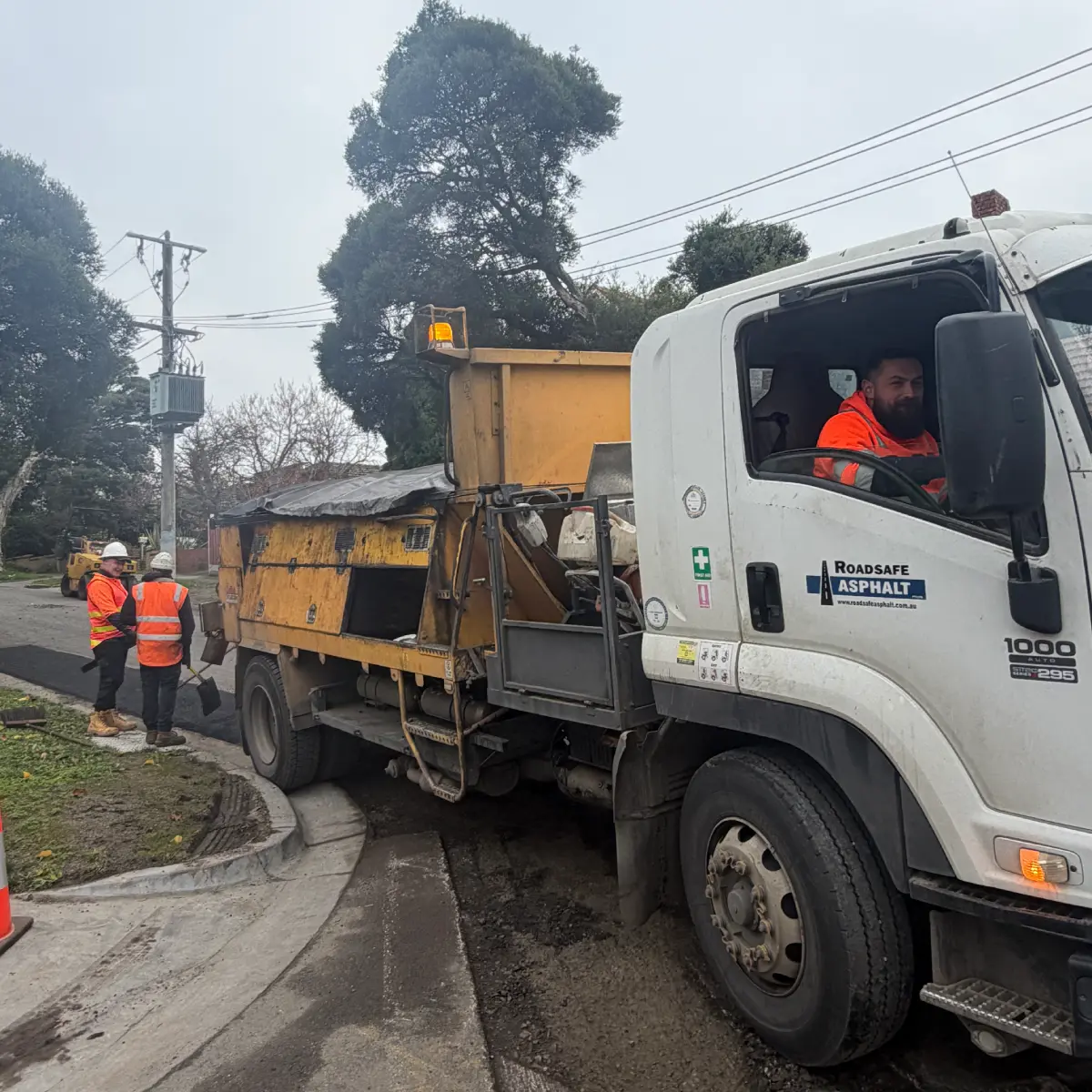
A flocon holds its load in an insulated body and feeds it out by chain floor without raising anything, placing material under control directly into the work. That makes it the truck for tight access, overhead hazards, uneven ground, detailed reinstatement and any job where the heat has to survive the trip.
A standard tandem tipper carries more, around 11 to 13 tonnes, and tips hydraulically, which moves volume well on open, accessible sites. What it cannot do is insulate the load or unload without raising its body, so it is the wrong tool for confined or overhead-constrained work.
The choice usually turns on four things:
- Temperature: the insulated flocon holds asphalt in spec; a tipper does not.
- Discharge and safety: the flocon feeds material out without raising a body, suiting confined sites and overhead hazards.
- Access: the small 7-tonne flocon reaches sites a larger tipper cannot.
- Volume: a tandem tipper carries more per trip on open, accessible jobs.
There is no single best truck, only the right one for the conditions. For tight, detailed, heat-sensitive asphalt work, the flocon wins; where the job turns to higher-volume haulage on open sites or mixed materials through the day, the tandem tipper and Truck and Dog earn their place instead.
How Flocon Bodies Protect Asphalt Quality During Transport
That heat advantage is the flocon’s whole reason for being, and it comes back to one fact about asphalt: the mix has to be spread and compacted while it is still hot enough to work. Asphalt leaves the plant hot, with the discharge temperature for standard dense graded mixes typically capped around 170°C, and it has to arrive with enough heat left to place and compact properly.
This is exactly what the insulated flocon body is built to protect. It slows heat loss in transit, the covered load does the rest, and the result is asphalt that is still workable when it reaches the crew.
Get a cold load instead, and the consequences run in a chain. As Hector puts it, when asphalt cools too much “it becomes harder to spread and compact correctly. That can lead to poor finish quality, segregation, density failures, and reduced pavement life.” Loads that fall outside specification can be rejected outright, turning a delivery into wasted material, lost time and added cost.
The standards treat this as a defect to be designed against, not bad luck. On council work, asphalt joints have to be formed and compacted while the material is still workable, because a joint made against an edge that has already cooled is a recognised weak point, the place a pavement first cracks and lets water in. Holding temperature is not a nicety. It is the line between a load that performs and one that fails.
Why Timing Is as Critical as Temperature in Asphalt Transport
The insulated body protects the heat, but it cannot buy back time that is lost on the road, which is why timing matters as much as the temperature it is meant to preserve. The mistake, in Hector’s view, is treating haulage as a simple errand. “A common misconception is that asphalt transport is simply about getting material from the plant to site,” he says. In reality the timing, the temperature, the truck selection, the access and the communication all feed into whether the job succeeds, and delay is the biggest single risk among them.
Congestion, plant hold-ups, breakdowns and loose scheduling all eat into the heat and the timing. The standards recognise the risk directly: a paving delay that lets the asphalt fall below its compaction temperature forces a transverse joint, which is the formal version of the cold-joint risk every delayed load carries. When the heat or the timing goes, the crew stops, productivity drops, and the material can end up unusable and replaced at cost. As Hector sums it up, “good transport coordination is critical to keeping operations efficient.”
This is why distance is the wrong thing to fixate on. A short run that is poorly timed can cool a load just as surely as a long one, and a long haul that is well planned and well insulated can arrive in perfect condition. The risk lives in the timing and the coordination, not the kilometres, which is exactly where an experienced operation earns its value.
Why Roadsafe Asphalt Is More Than a Flocon Hire Company
This is the heart of it. When you hire a flocon from Roadsafe Asphalt, you are not hiring a truck. You are hiring an experienced asphalt transport operation: the right vehicle, an operator who understands the asphalt, and the compliance and coordination that keep a load hot and a job moving. The truck is the easy part. The operation around it is what protects the result.
It shows first in how a job runs. The flocon loads hot mix at the plant, the load is covered, and it travels straight to site to hold temperature. On arrival, the driver coordinates with the crew and positions the truck, then runs the chain floor to feed the asphalt out slowly and under control, rather than tipping it in one drop. That controlled discharge keeps material flowing at the rate the crew can place it, and keeps everyone safe in the confined or sensitive spots where a raised tipper body would be a hazard.
What makes that sequence work is the person running it. Every flocon Roadsafe Asphalt sends out comes with an experienced driver, and on asphalt transport the driver is not a formality bolted onto the truck. Hector is clear that a good flocon driver does far more than steer it.
In his words, the driver “understands much more than simply driving the truck. He knows best routes to and from different suburbs to eliminate as much traffic congestion as possible, he also understands asphalt, laying operations, site safety, and how to work efficiently with the asphalt crews.” That knowledge is temperature control in another form: the driver who reads the route and times the run is protecting the heat just as surely as the insulated body is.
It is also where the burden shifts off the client and onto Roadsafe Asphalt. Because the truck comes with the operator, the operational risk, maintenance and compliance stay with Roadsafe Asphalt. The business carries public liability, workers compensation and plant insurance, and manages the maintenance records, pre-start inspections, risk assessments and safe work procedures that running the fleet demands. The client hires a result, not a logistics problem, and that is the difference between hiring a flocon and hiring an operation that knows how to use one.
Trusted for Flocon Hire Across Victoria for Nearly 20 Years
With nearly 20 years of operation across Melbourne and regional Victoria, Roadsafe Asphalt works with councils, contractors and asset owners to deliver reliable, compliant asphalt and civil outcomes. Flocon truck hire is backed by over 45 major fleet and plant equipment, experienced wet-hire drivers trained in asphalt transport, regularly serviced and compliant vehicles, safety systems including Safe Work Method Statement (SWMS) and permits, and prequalification to Department of Transport and Planning standards.
Behind that fleet is the experience that actually keeps asphalt moving. Many of Roadsafe Asphalt’s customers have stayed with the business for more than 15 years, across hundreds of successful projects throughout Victoria, spanning local councils, major contractors, utilities and transport providers across rail, civil and utility infrastructure. That kind of retention is what an experienced transport operation earns over time, not something a truck on its own can buy.
Whether you are reinstating a utility trench or running a council patching program, the right flocon and an experienced Roadsafe Asphalt operation keep the asphalt hot and the job moving. Get a fast quote for your next flocon truck hire project, or speak with our plant and equipment hire specialist about the transport behind your project.
Frequently Asked Questions (FAQs)
What is a flocon truck?
An insulated asphalt truck that carries hot mix and discharges it by an internal chain floor rather than by raising a tipping body. Roadsafe Asphalt runs small 7-tonne flocons suited to tight-access and detailed work.
What is the difference between a flocon and a tipper?
A flocon has an insulated body that holds asphalt temperature and discharges by chain floor without raising the body, which suits confined sites and overhead hazards. A tandem tipper carries more, around 11 to 13 tonnes, but has no insulation and must tip to unload.
What temperature does asphalt need to stay within?
Asphalt is laid hot and must arrive hot enough to place and compact. Under the asphalt pavement standards the discharge temperature for standard dense graded asphalt is typically capped around 170°C, with higher limits for polymer modified binders. If it cools too much it can fail quality requirements and may have to be rejected.
Why use a flocon for utility and council works?
Because so much of that work is small, confined and detailed. The small 7-tonne flocon reaches tight access, unloads under control without raising its body, and holds temperature on smaller loads, which suits utility reinstatements and council patching.
Does Roadsafe Asphalt flocon hire include a driver?
Yes. Roadsafe Asphalt operates on a wet hire model, so an experienced driver comes with every truck. The driver manages routes, timing, site access and coordination with the crew, all of which affect whether the asphalt arrives within temperature.
How does a flocon keep asphalt hot?
The insulated body reduces heat loss in transit and the load is kept covered, which helps hold the asphalt within specification for longer. Minimising delays through good routing and coordination does the rest.